.e8e5ab5c.svg)
 Alle Festivals Events
Bequem und sicher zahlen









Dictée - Tanztage Berlin 2027
Francesca Ferrari
Veranstalter:
Sophiensaele GmbH , Sophienstraße 18, 10178 Berlin, Deutschland
Anzahl wählen
Derzeit online keine Tickets, ggf. Restkarten ab 2 Stunden vor Beginn der ersten Veranstaltung des Tages an der Abendkasse./Currently no tickets online, remaining tickets may be available at the box office from 2 hours before the start of the first event of the day.
Veranstaltungsinfos
English version below
Im Rahmen von / As part of Tanztage Berlin 2027
Tanz / Dance, Performance
Hochzeitssaal
Englisch, Französisch, Deutsch, Italienisch (keine Sprachkenntnisse notwendig) / English, French, German, Italian (no language skills required)
Ca. 1h
Ein imaginärer Warteraum. Ein Feld der Poesie. Ein Zustand der Krise. Surrealistische Idiome. Eine Reihe wiederkehrender Zirkel. Viele Zeug*innen. (1)
Dictée betrachtet das Diktat nicht nur als explizite sprachliche Anweisung, sondern auch als politische und klangliche Ordnung, die sich in sozialen Gesten, Wiederholungen und Wahrnehmungsmustern manifestiert. In einem Z e i t v a k u u m durchlaufen drei Performer*innen körperlich wie stimmlich Modalitäten des Diktierens, während sie zugleich mit potenziellen Taktiken der Abweichung spielen.
Diese Arbeit ist neben anderen Referenzen von Theresa Hak Kyung Chas Buch Dictee (1982) beeinflusst. In seiner Form ähnelt es einer Collage. Auf Textpassagen folgen Leerstellen, politische Dokumente, Fotografien, handschriftliche Notizen wie Briefe. Einige der Taktiken sind in den Kontext dieser Arbeit übertragen.
Lies die Fußnoten. (2)
Ich möchte lieber nicht.
(1) Historisch gesehen sind Warteräume Orte, die von Autoritäten genutzt werden können, um zivile Körper in Unsicherheit zu versetzen.
(2) Wie bewegen wir uns in einer brüchigen Welt?
Künstlerische Leitung, Choreografie, Text: Francesca Ferrari
Performance: Luca Bonamore, Francesca Ferrari, Louise Trueheart
Sound: Paul Ebhart
Szenografie: Thomas Bohne
Licht: Klimentina Milenova
Styling: Alara Kocman
Dramaturgische Beratung: Olivia Axel Scheucher
Outside Eye: Chris Standfest
Zine: Francesca Ferrari
Grafik, Layout Zine: Thomas Bohne
Foto: Elif Gündüz
Video: Yazdan Zand
Dank an: Theo-Emil Krausz, Kira Koplin (Produktion Premiere 2026)
Eine Produktion von Francesca Ferrari in Koproduktion mit Drifting Productions & WUK performing arts. Gefördert durch die Kulturabteilung der Stadt Wien (MA 7), das Bundesministerium für Wohnen, Kunst, Kultur, Medien und Sport (BMWKMS) und den SKE Fonds. Unterstützt durch die TURBO Research Residenz, ImPulsTanz Festival, Uferstudios Berlin, PSR Kollektiv und Im_flieger. Die 36. Tanztage Berlin sind ein Festival der Sophiensæle. Gefördert von der Senatsverwaltung für Kultur und Gesellschaftlichen Zusammenhalt. Gefördert aus Mitteln des Hauptstadtkulturfonds. Mit freundlicher Unterstützung von Tanzfabrik Berlin e.V. und Uferstudios GmbH. Medienpartner: The Berliner, Berlin Art Link, Missy Magazine, Siegessäule, taz, tip Berlin, Yorck Kino-Gruppe.
-----
An imaginary waiting room. A zone where poetry becomes possible. A state of crisis. Surrealism idiom of speakers. A series of recurring circles. Many witnesses. (1)
Dictée approaches dictation not only as an explicit linguistic command but also as a political and sonic order that manifests itself in social gestures, replications and patterns of perception. Three performers move within a temporal v a c u u m physically and vocally practicing states of dictating while playing with possible tactics of deviation.
Amongst other references this work is also influenced by Theresa Hak Kyung Cha’s book Dictee (1982). In its form, it resembles a collage—eluding any notion of linearity. Text passages are followed by blank spaces, political documents, photographs, handwritten passages and letters. Some of its methodological tactics are translated into the context of this work.
Read the footnotes. (2)
I would prefer not to.
(1) Historically waiting rooms are places that can be used by those in power to create insecurity among civilians.
(2) How do we move in an unstable world?
Artistic direction, choreography, text: Francesca Ferrari
Performance: Luca Bonamore, Francesca Ferrari, Louise Trueheart
Sound: Paul Ebhart
Set design: Thomas Bohne
Lighting design: Klimentina Milenova
Styling: Alara Kocman
Dramaturgical support: Olivia Axel Scheucher
Outside eye: Chris Standfest
Zine: Francesca Ferrari
Graphic design, zine layout: Thomas Bohne
Photography: Elif Gündüz
Video: Yazdan Zand
Thanks to: Theo-Emil Krausz, Kira Koplin (production, 2026 premiere)
A production by Francesca Ferrari in co-production with Drifting Productions & WUK performing arts. Funded by the City of Vienna’s Department of Cultural Affairs (MA 7), the Federal Ministry of Housing, Arts, Culture, Media and Sport (BMWKMS) and the SKE Fonds. Supported by the TURBO Research Residency, ImPulsTanz Festival, Uferstudios Berlin, PSR Kollektiv and Im_flieger. The 36th edition of Tanztage Berlin is a festival by Sophiensæle. Funded by the Senate Department for Culture and Social Cohesion. Funded by the Capital Cultural Fund (HKF). With the kind support of Tanzfabrik Berlin e.V. and Uferstudios GmbH. Media partners: The Berliner, Berlin Art Link, Missy Magazine, Siegessäule, taz, tip Berlin, Yorck Kino-Gruppe.
Ort der Veranstaltung
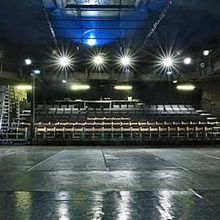
Die Sophiensæle sind ein Haus für KünstlerInnen und Publikum, in dem die Begegnung zwischen beiden Gruppen im Mittelpunkt steht. Die wechselhafte Geschichte des Gebäudes und dessen ursprüngliche Bestimmung als Versammlungs-, Weiterbildungs- und Festort ist in der Gebäudearchitektur, an den Wänden und Decken der Räume weiterhin spürbar und schafft einen einzigartigen Rahmen für künstlerische Produktion und Begegnung.